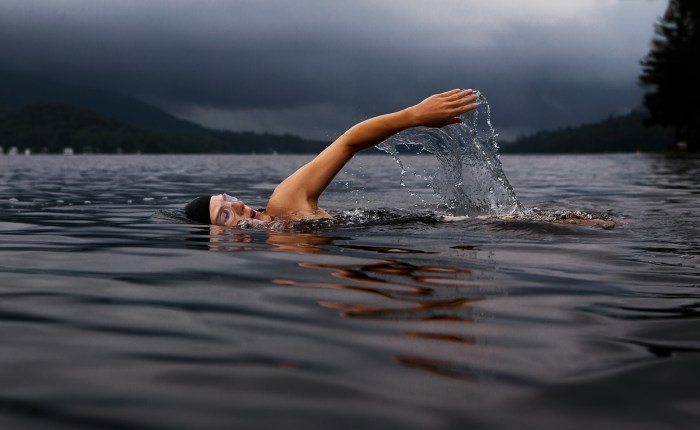
The Water Isn’t As Deep As You Think It Is

The Water Isn’t As Deep As You Think It Is

The cinematography was quite convincing.

We are transported back in time, April 1912 to be exact, 325 nautical miles south-southeast off the coast of Newfoundland. It is here in the frigid waters of the North Atlantic we find the wreckage of the Titanic, and in this iconic scene we see Rose floating upon a wooden door with Jack holding on tightly, his body almost fully submerged in the bitterly cold ocean, an ocean which would soon claim Jack’s life and the lives of hundreds more.

Then the director yelled “Cut!”.

The scene was over, Jack stood up, Rose got off the door, and together they walked to the edge of the tank, stepped out, and toweled off.

Apparently the water wasn’t as deep as we thought it was.

The power of cinematography.

On our own level, we are all talented cinematographers in our own right. We can be quite good at convincingly transporting ourselves into our own dramatic scenes, the painful and fearful emotional waters where we, too, may believe our only option is to cling ever so tightly to some Continue reading “The Water Isn’t As Deep As You Think It Is”
Some Saviors Will Never Save You

Some Saviors Will Never Save You

So there was Rose, floating on top of a door as Jack remained submerged in the frigid waters of the North Atlantic, hanging on until he could hang on no longer.

Titanic. The movie. Many survivors clinging in the darkness to whatever they could find to keep themselves above the freezing water, to keep themselves alive long enough to be rescued.

Survival Mode. Hanging on and hoping to be saved. 

It’s a great plan for a shipwreck. But it’s not a great way to live a life.

Life does at times unexpectedly throw us into the water and sometimes the only thing we can do is simply hold on and hope. It can be a matter of our survival, either physically or emotionally.

But how often in life do we continuously cling to uncomfortably familiar doors such as toxic situations, needed outcomes, outdated belief systems, and self-destructive habits, while waiting and hoping for someone or something to come and save us?

Sometimes we stay in survival mode for so long we accept it as part of our identity. And when we accept ourselves as survivalists we abandon our own innate capacity to heal as we find ourselves always in search of a new door, a new outcome, a new savior, someone or something to keep us afloat and to pull us out of the frigid waters of our limitations and fears. 

Yet the saviors we continue to attract tend not to be saviors at all. No matter how much we want them to be.

Because no one is coming to save us, to fix us, to keep us afloat.

Our emotional rescue? 

That is up to us.